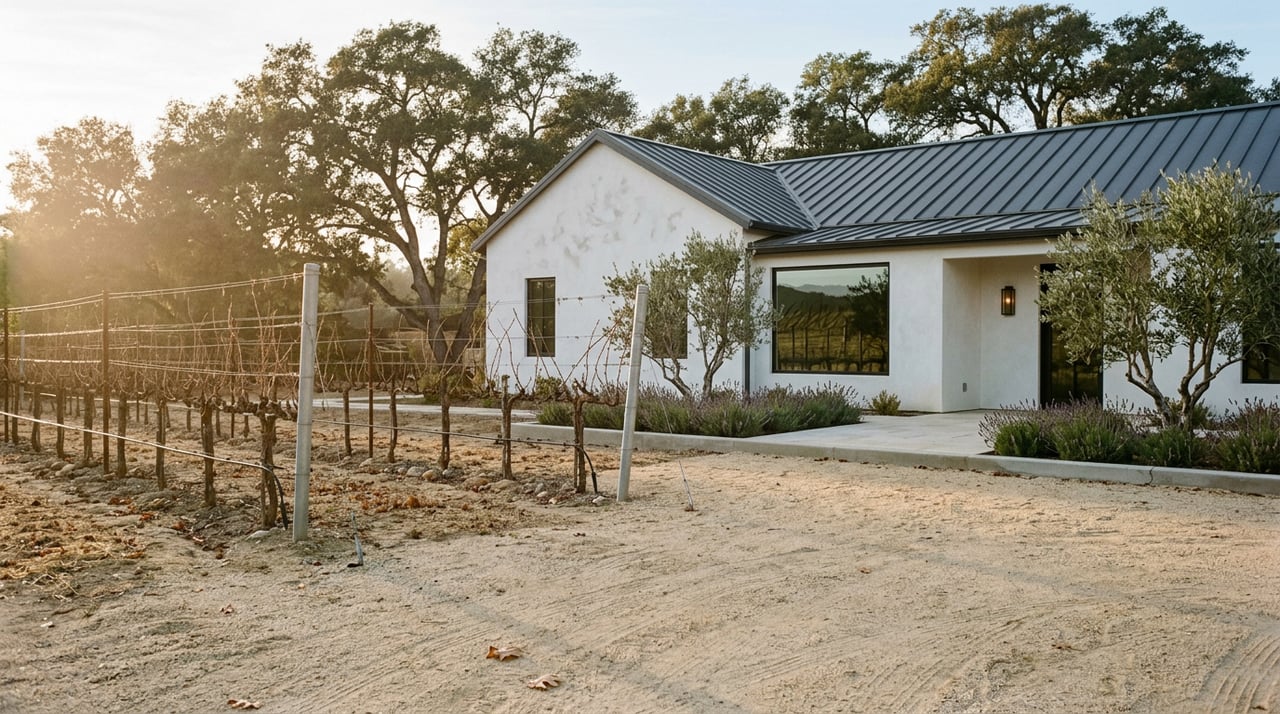
Beginner’s Guide To Buying A Vineyard In Healdsburg
March 5, 2026
March 5, 2026
Dreaming of your own vines in Healdsburg, with golden light on the rows and a label you can be proud of? The vision is real, yet the path involves clear choices about site, water, permits, and daily operations. This guide gives you a grounded overview so you can buy with confidence, avoid costly surprises, and match your lifestyle to the right property. You will find practical steps, local rules, and ballpark costs tailored to the Healdsburg area. Let’s get started.
Healdsburg sits at the meeting point of three celebrated AVAs. Dry Creek Valley tends to be warmer and favors Zinfandel and Cabernet. Russian River Valley is cooler with fog influence, which suits Pinot Noir and Chardonnay. Alexander Valley is a warmer inland valley known for Bordeaux varieties. Identify the AVA on any parcel you consider, then align your varietal goals with that microclimate.
Benches and well‑drained alluvial soils are prized for vine health and quality. Slopes can shed cold air and reduce frost risk, though they can add erosion and permitting complexity. Many first‑time buyers look at 1 to 10 acres for a lifestyle vineyard, while commercial models often scale to 20 to 30 acres because fixed costs like trellis, irrigation, and roads are spread over more vines. For cost expectations and local conditions, review UC Cooperative Extension’s guidance for Sonoma growers, including sample budget references from UC studies in the region. You can start with the Sonoma viticulture FAQ from UC Cooperative Extension for a practical overview of costs and considerations.
Water supply determines what you can plant, how you irrigate, and whether you can protect against spring frost. Confirm the presence and capacity of any domestic or agricultural wells, any legal right to divert surface water, and the volume of any pond on site. If a property relies on a stream diversion or stores larger volumes, a permit may be required under California’s water rights system. For background on how rights and permits work, use the State Water Resources Control Board’s overview of water rights and permitting.
Sonoma County updated its well permitting rules in 2023, including new metering and public‑trust review in mapped areas. Some parts of the ordinance have seen litigation and stays, so you should confirm the current process with Permit Sonoma and check whether a parcel is in the county’s Public Trust Review Area. Start with Permit Sonoma’s well ordinance update page for current guidance.
North Coast vineyards often budget about 0.6 acre‑feet of water per acre for seasonal crop use. Actual needs vary with site, soil, and yield goals. Spring frost protection can be a larger, short‑term demand. Over‑vine sprinklers protect well but require robust pump capacity, often around 50 to 55 gallons per minute per acre. That affects pond size, pump horsepower, and pipe design. Wind machines use no water, but they only help where temperature inversions form and the terrain allows mixing. Passive strategies like choosing a site with good cold‑air drainage and delaying pruning on low spots can reduce the need for heavy frost systems.
For a grower’s perspective on frost system design and water demand, see this discussion of North Coast viticulture infrastructure and protection options.
Installing a North Coast vineyard often exceeds 20,000 dollars per acre for site prep, trellis, plants, and irrigation. This does not include land, ponds, or major civil work. UC Cooperative Extension provides region‑specific cost studies and Sonoma guidance that can help you build a realistic budget.
Production varies by site and variety, but many quality‑focused Sonoma vineyards target about 2 to 5 tons per acre. A simple planning conversion helps translate vines into wine: 1 ton of grapes produces about 150 gallons of wine, which equals roughly 63 cases of 12 bottles. Use this math to size any future label plans, tank capacity, or storage.
Vineyard work is seasonal and often blends hand crews and mechanization. If you use a farm labor contractor, California requires licensing and county registration. Sonoma County publishes farm labor contractor requirements and verification steps. Also be aware that California’s overtime law for agricultural employees has phased in new thresholds, which can change labor budgets and scheduling.
If you plan to provide on‑site housing for crews of five or more, the California Employee Housing Act applies. That program sets permits, inspections, and maintenance rules. Engage housing questions early in your planning.
Specialized lenders understand vineyard and winery needs. Many first‑time buyers look at a mix of options while they build a plan and line up the right property fit.
Lenders will expect a business plan, realistic cost and yield assumptions, and a clear water and permit history. Get pre‑qualified early and be ready for an appraisal that reflects vineyard use and infrastructure.
Buying a vineyard in Healdsburg can be both soulful and sound if you line up site fit, water security, and a clear permit path. Take time to match scale and budget to your lifestyle or business plan. If you want curated access to lifestyle vineyards and country estates, along with calm, local guidance from first tour to closing, connect with us. Schedule a conversation with The Hedges • Davis Group to explore on‑market and priority off‑market opportunities that fit your vision.
If you're seeking a real estate professional who combines unparalleled dedication, market expertise, and genuine kindness, The Hedges • Davis Group is a perfect choice.

Timothy Hedges | CA DRE# 01368460
[email protected]
(707) 696-7325
6790 McKinley St #120
Sebastopol CA 95472